
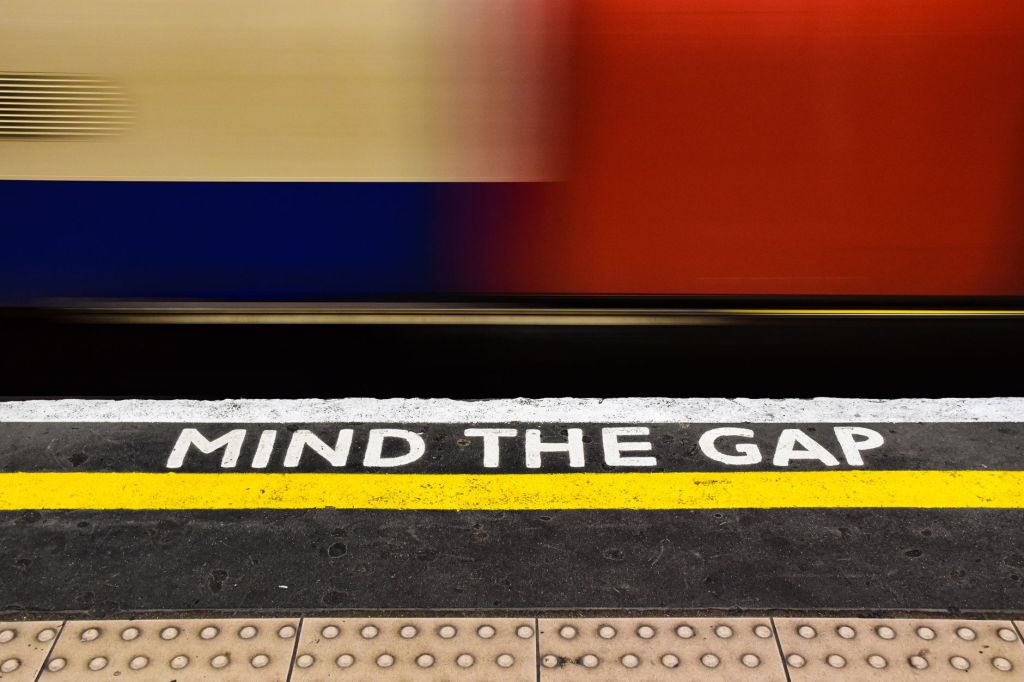
I used to think one of the problems with humans is that we make assumptions.
But lately I’ve been thinking that maybe the real problem is when we mistake our assumptions for facts and use them to fill in the gaps.
Recently, my husband seemed off. When I checked in, he simply said, “I’m tired.” Within seconds, my brain had finished the story and concluded:
“He’s tired of me.”
He hadn’t said that.
He hadn’t even implied it.
My brain simply couldn’t tolerate the gap between what he said and what I wanted to know.
Which is every tiny detail plus GST.
So instead of asking him what he meant and playing twenty questions, I wrote the ending myself. I filled the gap.
And once I became aware of this gap filling, I started noticing it everywhere.
When I wrote my Mamamia article about burnout, some of the readers comments confidently filled in information that wasn’t in the article. Some people suggested I had ignored everything I’d learnt during my mental health training. Others stated I hadn’t recognised the signs of burnout, and one even decided I had purposely chosen to ignore the literature on it.
None of that was in what I’d written.
The article was an 800-word snapshot of a huge experience, and although initially I felt annoyed reading those comments, I came to see that it wasn’t malicious. It was human.
There was a gap, and our brains don’t like gaps.
From what I have seen and experienced, uncertainty makes us uncomfortable.
We want the world to make sense. We want ourselves to make sense. We want every loose end tied up in a neat bow because uncertainty feels vulnerable. If we can explain something quickly and tick all the boxes, we feel like we’ve regained a little control.
The problem is that the story we create often says more about us than it does about reality.
I decided to try something different in the way I approached assumptions and conduct my own experiment. Instead of treating every moment as a verdict, I deliberately started watching the trajectory.
One conversation didn’t need to define a relationship.
One rough day didn’t define a whole person.
One comment didn’t define someone’s full intentions.
I stopped asking, “What does this mean?” and started asking, “What else could be true?”
And it changed things.
My reactions became more measured, my decisions more intentional, and I had more time to challenge the sometimes crazy story my brain had created.
I told my husband about that morning.
“When you said you were tired, my brain filled in the gaps, and the story became that you were tired of me.”
That small shift gave him the opportunity to tell me what his experience actually was instead of defending himself against one I’d invented, and it opened up the door to a whole different conversation that he got to own.
Because while filling the gaps can create havoc in our own minds, it doesn’t just affect us.
When I decide why you’re upset before you’ve told me, I’ve declared myself the expert on your experience. When someone reads my article and immediately explains my life back to me, they’ve replaced curiosity with certainty. Filling the gaps takes away other people’s autonomy and opportunities to tell their story.
So what if, instead of assuming with knowledge that we don’t have, we asked a question instead?
What if we got curious?
“What made it hard for you to put your burnout knowledge you had into practice?”
In asking a question, we assume something powerful, and that is that there is a part of a story here that we don’t know yet. Our curiosity becomes a sign of respect, and it says:
“I don’t know your experience yet, and I’m willing to let you tell me before I decide what it is.”
I don’t think it’s possible to stop making stories altogether, but I want to hold them more lightly. And before deciding what someone means or thinks, or filling the gaps about who they are, I want to take a breath and reject the idea that I’m responsible for creating information that isn’t there.
Because I’ve started to believe the world would be a very different place if we became less certain and more curious about the stories we don’t yet know.
Kat xx


Leave a Reply